 PuzzleZa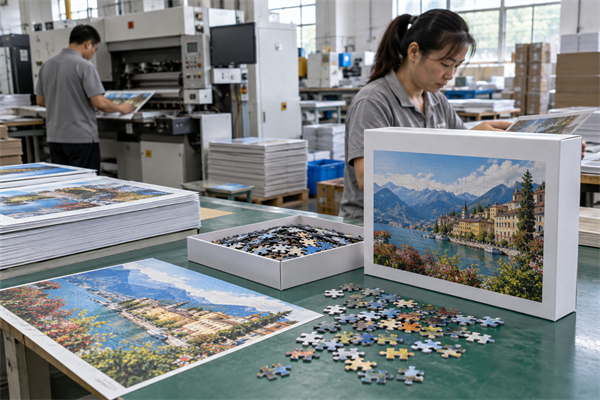
Puzzle artwork needs to work as a printed, cut physical surface, not only as an attractive screen image. Resolution, crop, color conversion, bleed, safe areas and packaging versions all affect whether the final product reflects the approved creative direction. A disciplined file-preparation process prevents avoidable revisions when the production schedule is already underway.
Start with a decision-ready project brief
Ask the manufacturer for the exact template before final artwork is built. The template should identify finished dimensions, bleed and safe areas for the puzzle, box, poster and inserts. Use the source image at the required final physical size rather than enlarging a small web image. As a general production practice, many print workflows request high-resolution files and CMYK-ready artwork, but the final file specification must come from the factory and product format you are using.
A practical brief also makes comparisons fair. Give potential suppliers the same core information and ask them to identify assumptions rather than silently filling gaps. This keeps commercial choices visible: which part of the specification creates customer value, which detail is driven by the sales channel, and which item needs a decision from your team. It also gives the factory a usable starting point for installation preparation, prepress review and packing planning.
What a buyer should define before requesting a quote
- Target customer, sales channel, destination market and launch milestone.
- Quantity scenario, finished size, proposed piece count and product application.
- Artwork status, ownership or licensing position, and every planned printed component.
- Packaging direction, inserts, barcode or label needs, and any retailer routing requirements.
- Sample approvers, required factory testing, shipment inspection and freight handover owner.
Choose the product around the customer experience
Design with the puzzle experience in mind. Keep crucial faces, titles, logos and fine details away from trim or vulnerable edge areas. Review whether large uniform regions, repeated patterns or minute text are appropriate for the selected piece count. The aim is not to make every image easy; it is to make it intentional. An art puzzle can be challenging while still preserving useful landmarks and a pleasing finished image.
When comparing options, ask what changes for the person who receives the product. A specification should have a visible reason: perhaps it protects detailed art, makes an educational activity clearer, supports a gift-worthy unboxing sequence or fits a retailer's shelf. This discipline prevents a common sourcing error in which individual choices look attractive on their own but do not form a coherent customer experience when packed together.
It is also useful to make trade-offs explicit. A more complex format may affect development work, component control or logistics. A simplified pack may improve fulfilment but leave less room for story content. Neither result is inherently right or wrong. The value of a B2B manufacturer conversation is that product, creative and operational implications can be reviewed together while the option is still affordable to change.
Use the sample as evidence, not as a formality
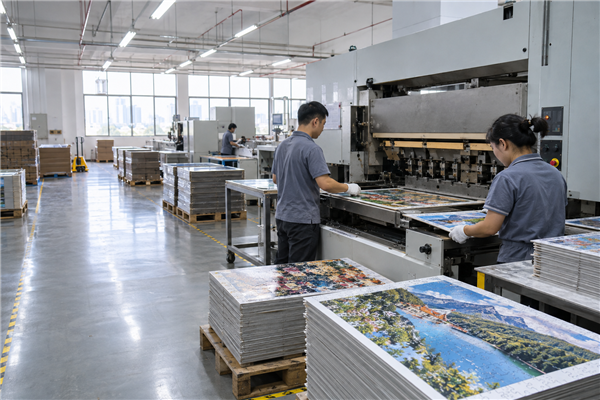
Use a controlled file list. Name each final file by component and version, for example puzzle art, box lid, box base, poster and instructions. Convert or supply colors according to the agreed workflow and check proofs against the approved source under suitable viewing conditions. A digital proof can confirm layout and text, while a physical pre-production sample helps the buyer judge how the color, finish and image detail behave on the actual board.
Bring the relevant teams into the review in the right order. Creative reviewers can confirm image, copy and visual hierarchy. Product and purchasing teams can check material, components and the commercial specification. Operations teams can review carton information, receiving limits and delivery readiness. Consolidate their feedback into one documented response so the factory receives a clear decision rather than conflicting comments from separate email threads.
The approved sample should answer a practical question for everyone involved: is this the product we are prepared to reproduce, pack, inspect and deliver?
Version control matters at this point. Reference the exact artwork, packaging and component versions in the sample-approval record. If a revision is needed, identify what changed, why it changed and whether another physical sample is necessary. This is not administrative overhead; it is the evidence quality and production teams use later when a project contains several files, SKUs or market versions.
Send Your Requirements
Share the product idea, quantity, artwork status and destination. We will help turn them into a practical custom puzzle brief.
Plan quality control, packing and delivery together
Artwork is also a production-control document. Once approved, the exact file versions should appear in the sample and production record used for factory testing and shipment inspection. If a change is required, replace it through a single revision path rather than emailing different versions to several contacts. This protects the product when multiple components are printed at different points in the manufacturing process.
For the factory, an inspection plan is most useful when it focuses on the details that define your product: correct artwork and pack version, print appearance, die-cut or component checks where relevant, bagging, inserts and carton marks. For the buyer, that same plan makes shipment inspection easier to interpret because the inspector can compare selected finished units with a known approval reference. It also gives freight teams a more reliable handover point.
Keep a final release file with the approved specification, production contact, inspection observations, carton information and agreed shipment documents. This supports a smoother first delivery and becomes valuable information for replenishment. The goal is not to eliminate every uncertainty in a custom product. It is to resolve the important ones at the stage where a correction is still manageable.
Apply the guide to your next puzzle project
These requirements apply to art puzzles, corporate promotions, educational products and private-label ranges. The more components a product has, the more useful a simple, controlled artwork-release checklist becomes.
Use this article as a working conversation tool. Share it with the people who own artwork, purchasing, product compliance and freight, then collect the unanswered questions before a quote is requested. A precise enquiry helps a factory respond with relevant options and helps your internal team distinguish confirmed requirements from preferences that still need a decision.
For material and sourcing context, see Adobe's overview of preparing files for print. For project-specific manufacturing support, explore our custom puzzle formats, Shenzhen factory capability and production process.
FAQ
What file format should I send for custom puzzle printing?
Ask the factory for its current preferred format and template. Production-ready PDF, AI or layered source files are often used, but the required setup depends on the specific workflow.
How much bleed does a custom puzzle need?
Use the factory's template. Bleed and safe-area requirements can differ by product component, so do not rely on a generic value from another printer.
Why do I need a high-resolution source image?
The image is printed at a physical size and divided into pieces. Adequate source resolution helps preserve clarity, especially for detailed art or larger finished puzzles.
Conclusion
A successful print-ready custom puzzle artwork begins with a defined customer outcome and ends with an approved, inspection-ready pack. Align the brief, sample, quality checks and delivery plan early; it gives your team a better basis for an accurate quote and a more dependable first shipment.
Get a Quote